


Flatbed Loads: How Owner-Operators Can Find Better Freight and Keep Their Trucks Moving
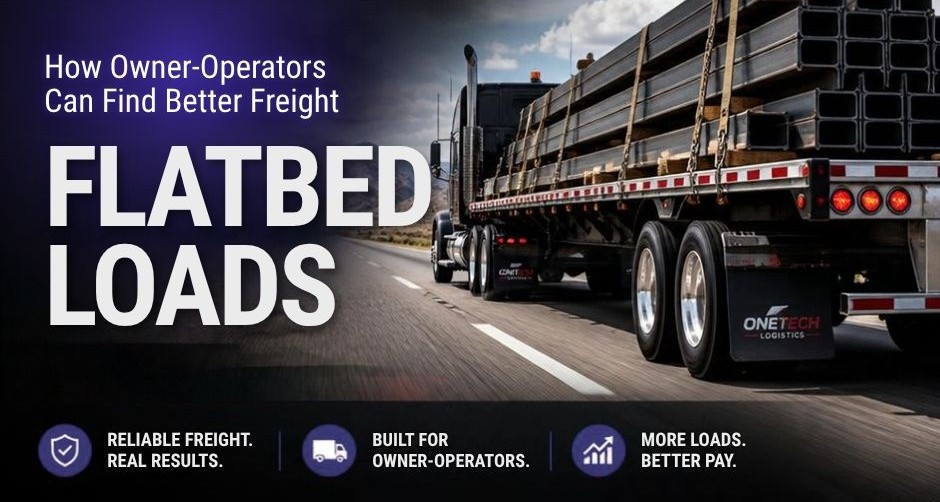
Having a truck available is one thing. Keeping it loaded with profitable freight is another.
For flatbed owner-operators, finding the right loads has a direct impact on how efficiently the business runs. A load may look attractive on a board, but once you factor in deadhead miles, fuel, securement requirements, appointment times, and what comes next — the economics can look very different.
Is Flatbed Trucking Profitable for Owner-Operators?
Flatbed can be a solid business model, but profitability depends on more than the rate next to a load listing. Every trip is affected by loaded miles, deadhead, fuel, tolls, maintenance, insurance, tarp and securement costs, detention, and reload availability.
Consider this comparison:
| Load A | Load B | |
|---|---|---|
| Gross Revenue | $2,800 | $2,500 |
| Loaded Miles | 700 | 650 |
| Deadhead | 250 miles | 50 miles |
| Total Miles | 950 | 700 |
Load A has a higher gross rate. Load B has far fewer unpaid miles. Which is actually better depends on fuel, tolls, and what the truck does after delivery. The point: evaluate the full trip, not just the posted rate.
What Types of Freight Move on Flatbeds?
Flatbed trailers handle freight that won’t fit in an enclosed trailer, making them useful across several industries:
- Construction materials — lumber, steel, pipe, roofing, concrete components
- Heavy equipment — excavators, generators, agricultural and industrial machinery
- Steel and metal products — beams, coils, fabricated components
- Oversized freight — anything requiring permits, escort vehicles, or special routing
Each category may come with specific securement requirements, permit needs, or loading considerations. Confirm the details before accepting.
How to Find Flatbed Loads
There’s no single source for all suitable freight. Successful carriers typically use a combination of the following.
Load Boards
Search by origin, destination, equipment type, pickup date, and deadhead distance. But don’t stop at the rate — check commodity, dimensions, appointment windows, and what the delivery market looks like for the reload.
Freight Brokers
Brokers connect carriers to shippers across construction, manufacturing, steel, and industrial sectors. Always confirm commodity, weight, dimensions, pickup and delivery requirements, and rate terms before committing.
Direct Shipper Relationships
Repeat freight from construction companies, equipment dealers, steel suppliers, and manufacturers can reduce the time spent searching. These relationships take time to build but can provide more predictable freight.
Flatbed Dispatch Services
A flatbed dispatch service handles the freight search, broker communication, rate negotiation, and appointment coordination — reducing the hours an owner-operator spends away from driving.
How to Reduce Deadhead
Deadhead is easy to underestimate. The truck is moving, fuel is burning, but no revenue is coming in.
Start looking for the next load before you deliver. If you know the delivery location, start checking freight leaving that market, nearby pickup locations, and reload timing. Also compare the full trip on every option — not just the gross rate. A load delivering into a strong reload market may be worth more than a higher-paying load that drops you in a freight desert.
What to Check Before Accepting a Load
Before booking any flatbed shipment, verify the following:
- Freight details: commodity, weight, dimensions, piece count
- Scheduling: pickup and delivery appointments, facility hours, detention terms
- Equipment: trailer length, tarp requirements, straps, chains, binders, edge protection
- Route: oversize permits, weight restrictions, bridge clearances, weather
- Financials: gross rate, deadhead, accessorials, rate confirmation, broker credentials
Don’t rely on the load board description alone. Call and confirm.
Common Mistakes Flatbed Carriers Make
- Choosing based only on gross rate — high revenue with heavy deadhead and a bad reload market can still be a poor trip
- Ignoring deadhead — a hundred extra unpaid miles repeated throughout a month adds up fast
- Not confirming load requirements — never assume a flatbed load is straightforward without checking weight, dimensions, and securement needs
- Waiting until delivery to find the next load — by then, options are narrower
- Spending too many hours self-dispatching — load boards, broker calls, carrier packets, appointments, and rate negotiations take real time away from running the truck. This is where professional flatbed dispatch support can make a difference.
How OneTech Logistics Helps Flatbed Carriers
Finding consistent freight isn’t about grabbing the highest number on a board. It’s about evaluating each shipment in the context of the whole trip.
OneTech Logistics provides carrier-side dispatch support for flatbed operations, including:
- Freight search across multiple sources
- Broker communication and rate negotiation
- Shipment detail review — rate, deadhead, commodity, securement, appointments
- Route and reload planning
- Rate confirmations and documentation
Every load is presented to the carrier for approval before booking. You stay in control of your freight decisions — we handle the back-office work.
If you’re spending hours each week on load boards instead of driving, that’s where we can help. Get started with OneTech Logistics and let us handle the freight search so you can focus on the road.
Frequently Asked Questions
What are flatbed loads?
Shipments transported on open-deck trailers — typically construction materials, steel, machinery, equipment, pipe, and oversized freight that won’t fit in an enclosed trailer. Learn more about how we support flatbed carriers.
How do I find flatbed loads near me?
Look for freight-generating industries nearby: construction sites, manufacturing facilities, steel suppliers, equipment dealers, and agricultural operations. Search those markets rather than limiting results to your exact location.
Do flatbed loads pay more than dry van?
Not always. Rates vary by market, lane, commodity, and season. The additional securement and equipment work on flatbed shipments should factor into your evaluation. If you also run a dry van, see our dry van dispatch services.
How can I reduce deadhead?
Plan the next load before you deliver. Develop preferred lanes. Compare reload markets, not just origin rates. Evaluate the full trip economics on every option.
What does a flatbed dispatch service do?
A dispatch service searches for freight, communicates with brokers, negotiates rates, coordinates appointments, and manages documentation — so the carrier can focus on driving. See our FAQ page for more details on how our service works.
How does OneTech Logistics work?
OneTech handles freight search, broker communication, and load coordination for flatbed carriers. Every load is presented to the carrier for approval before it’s booked. Contact us to get started or learn more about working together.
Does OneTech support other trailer types?
Yes. In addition to flatbed, we also offer reefer dispatch and power only dispatch services for carriers running different equipment.